

 Română
 English
 Deutsch
 Magyar
Calibrating evaluations: how to prepare and run the meeting
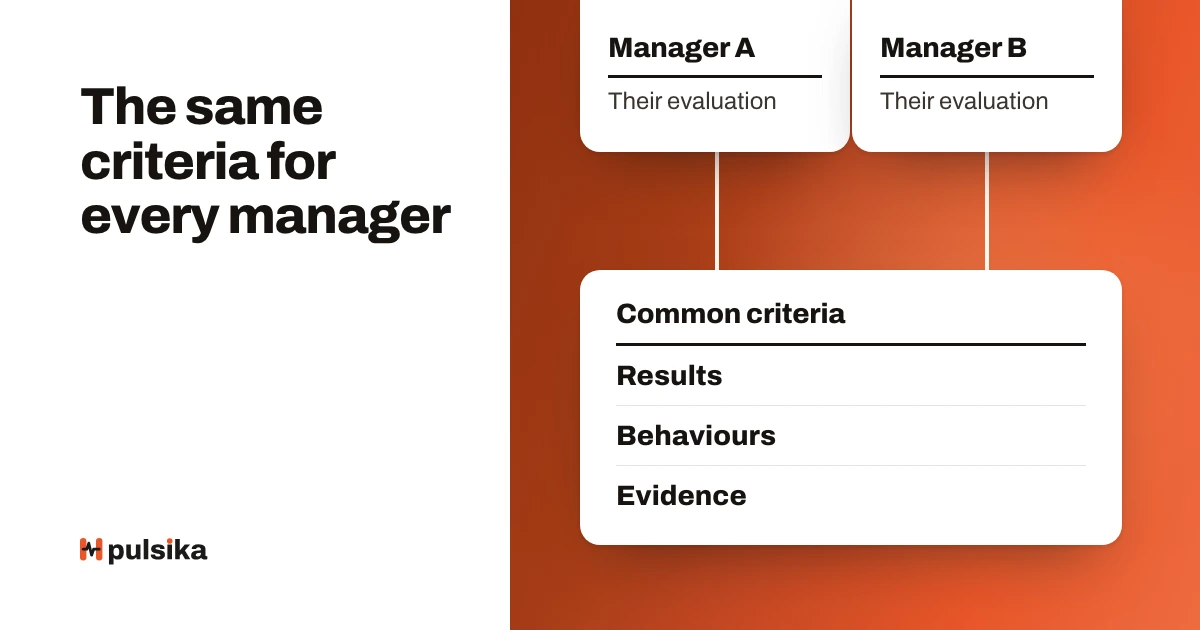
The calibration meeting step by step: who takes part, what data each manager brings, how to read the distributions, how to document the changes and what research shows about calibr...
Guides and articles on “Performance”.
The calibration meeting step by step: who takes part, what data each manager brings, how to read the distributions, how to document the changes and what research shows about calibr...
Support, creative and back-office roles: verifiable results instead of activities, service indicators, rubrics with anchors and a score calculated for payroll.
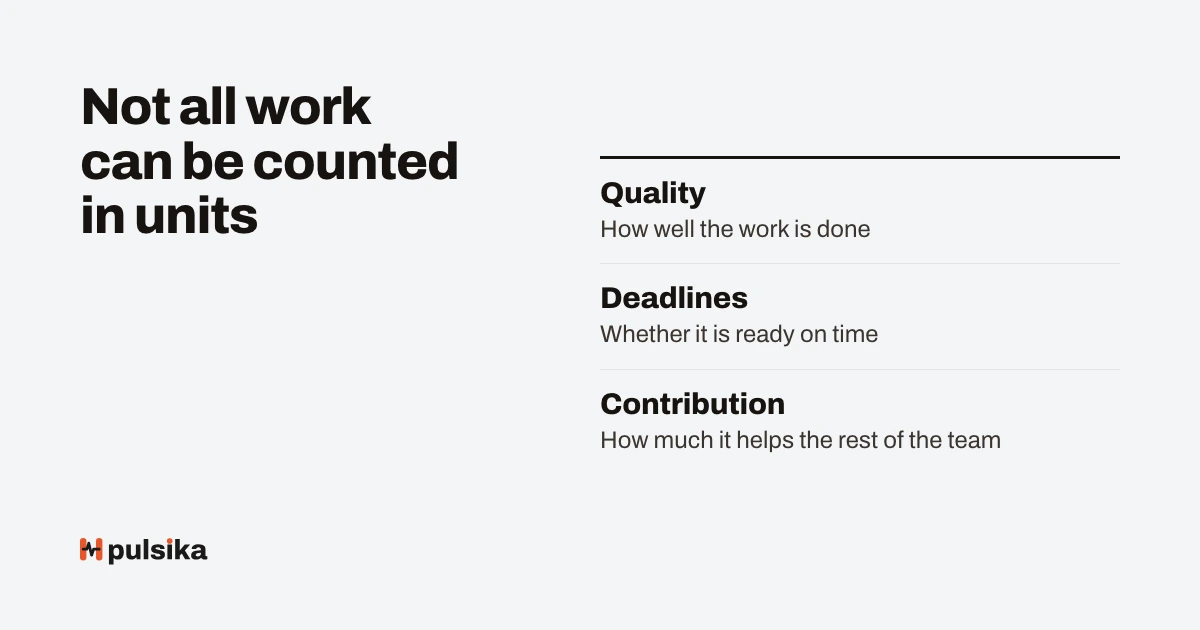
Six kinds of gap and the rule for each, five rules compared on the same score, the case in which redistributing the weight rewards the gap and an eight-step model policy.
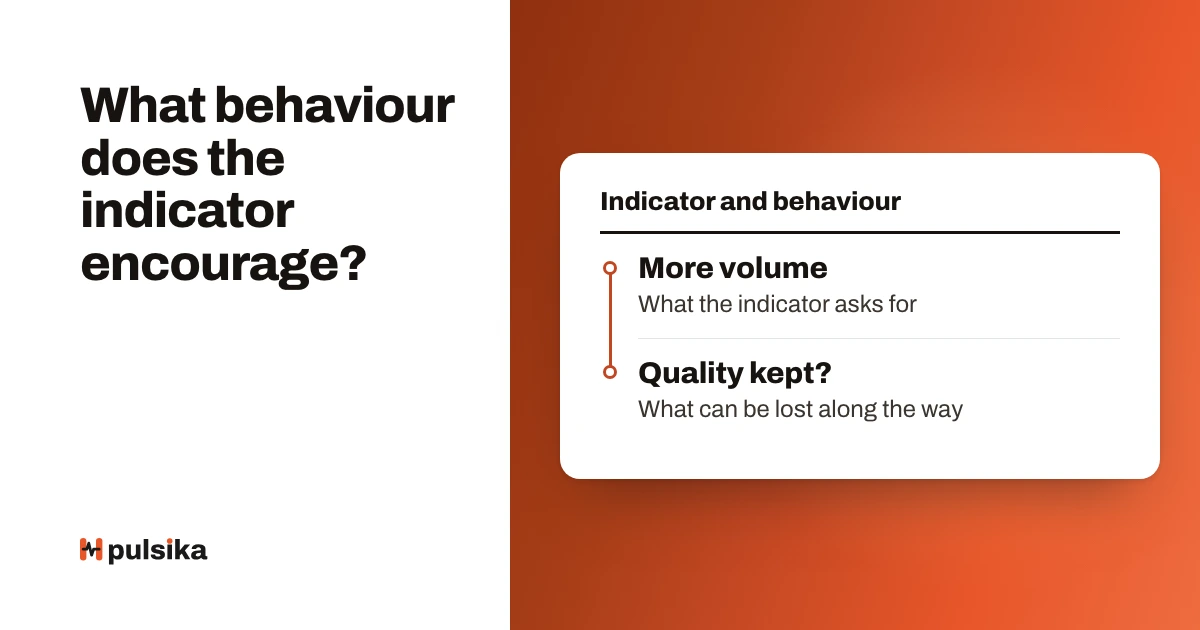
Why an indicator tied to a bonus ends up being “managed”, what can go wrong in eight roles, how a paired indicator changes the ranking and the five-question test for any KPI with a...
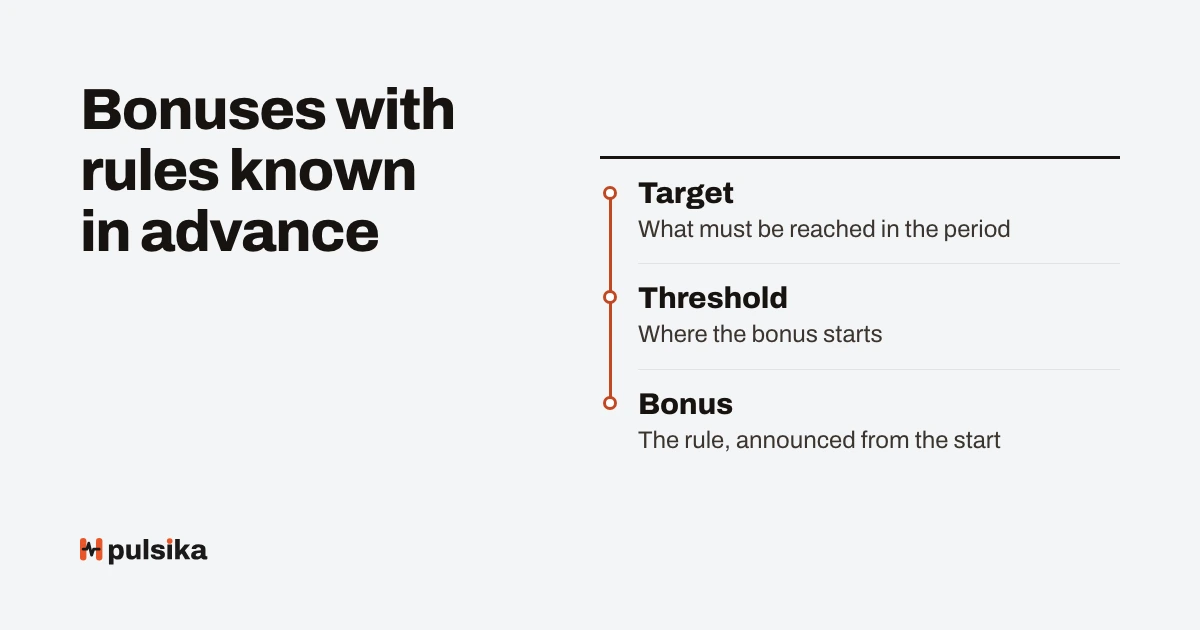
How to build a performance bonus: target bonus, entry threshold, curve, accelerator, cap and quality gate, with a worked example, a cost check and what Romania’s Labour Code provid...
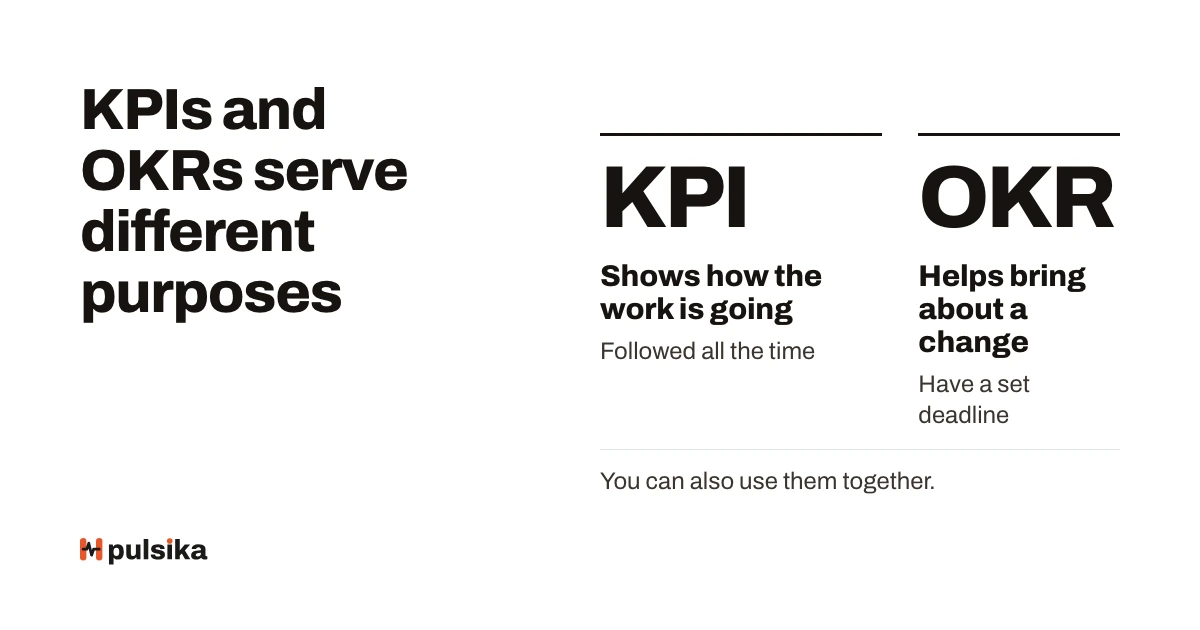
KPIs measure day-to-day running, OKRs follow a change within a quarter. A comparison on eight criteria, fitting situations, a worked example and how to combine them without spoilin...
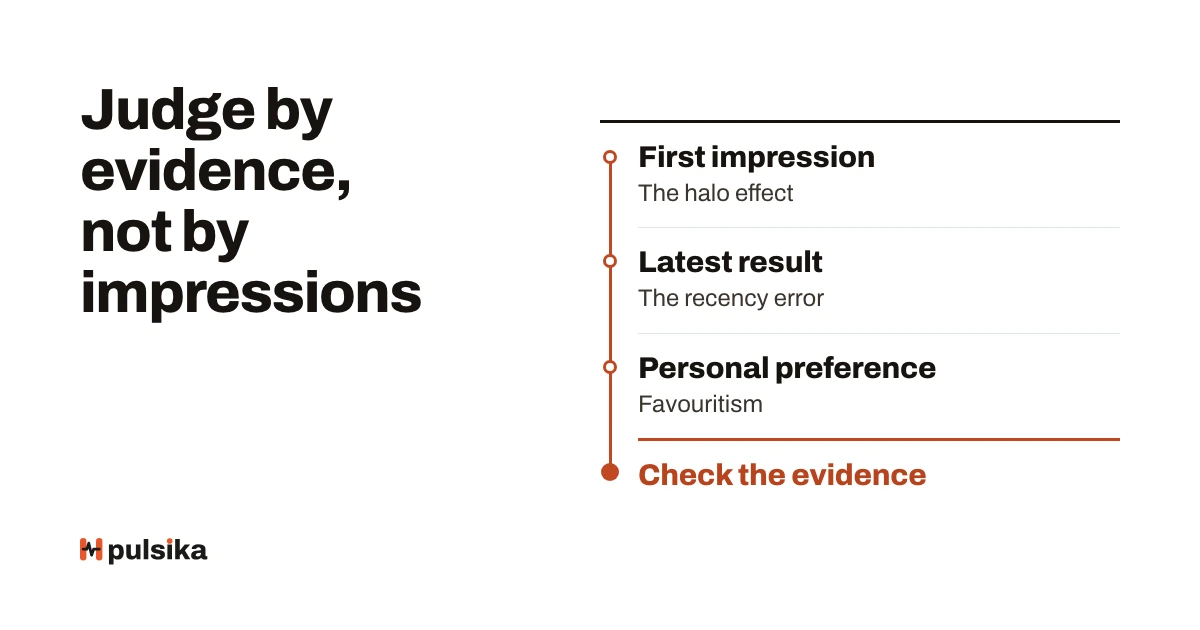
The assessor’s errors — halo, recency, leniency, severity, central tendency, contrast, favouritism —, how to recognise them in ratings and the countermeasures that work.
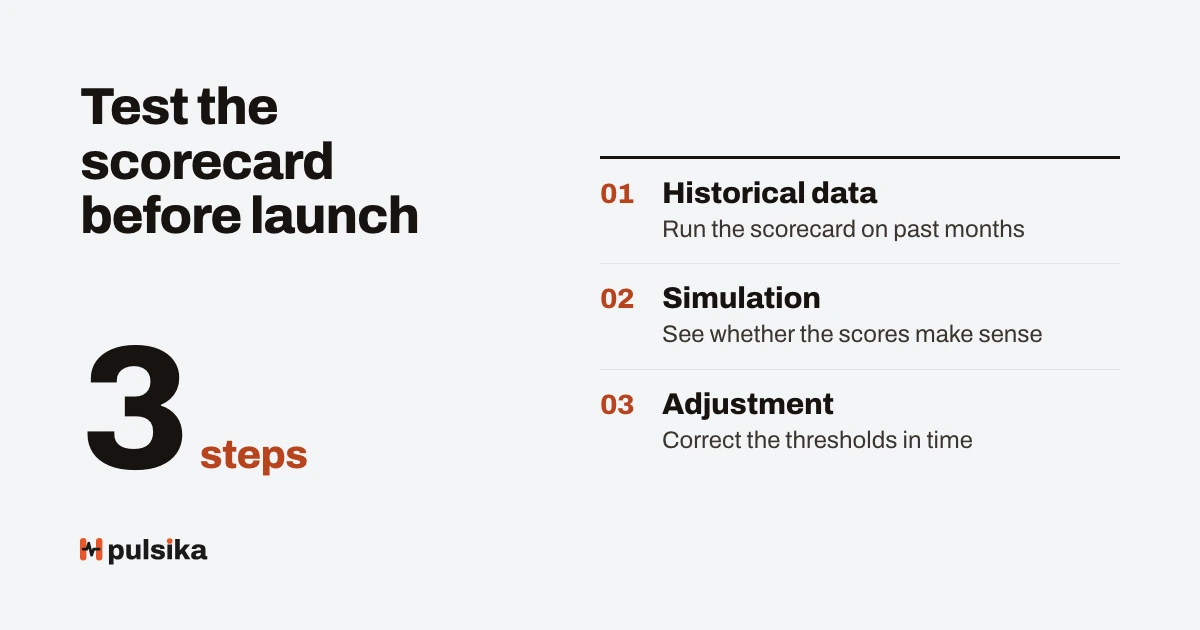
Test the KPI scorecard on 3–6 past months: the spread across levels, sensitivity to weights, each indicator’s effective weight and launch criteria. With a worked example and an Exc...
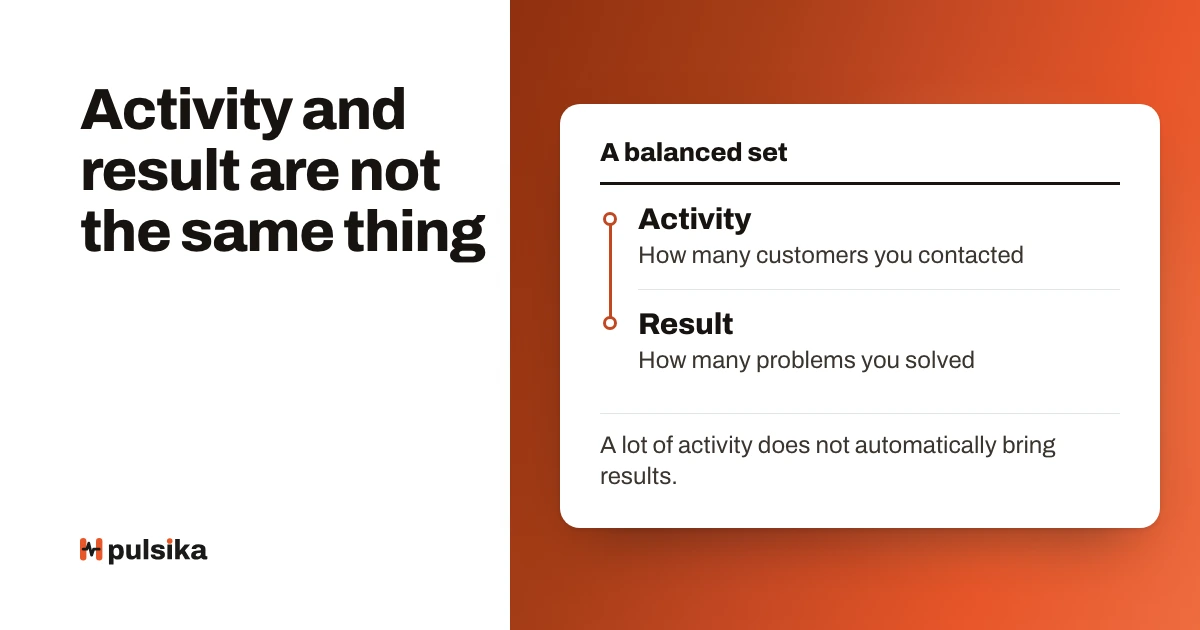
The difference between activity, leading and lagging (result) indicators, examples for six roles and how to check on data that an indicator really predicts the result.
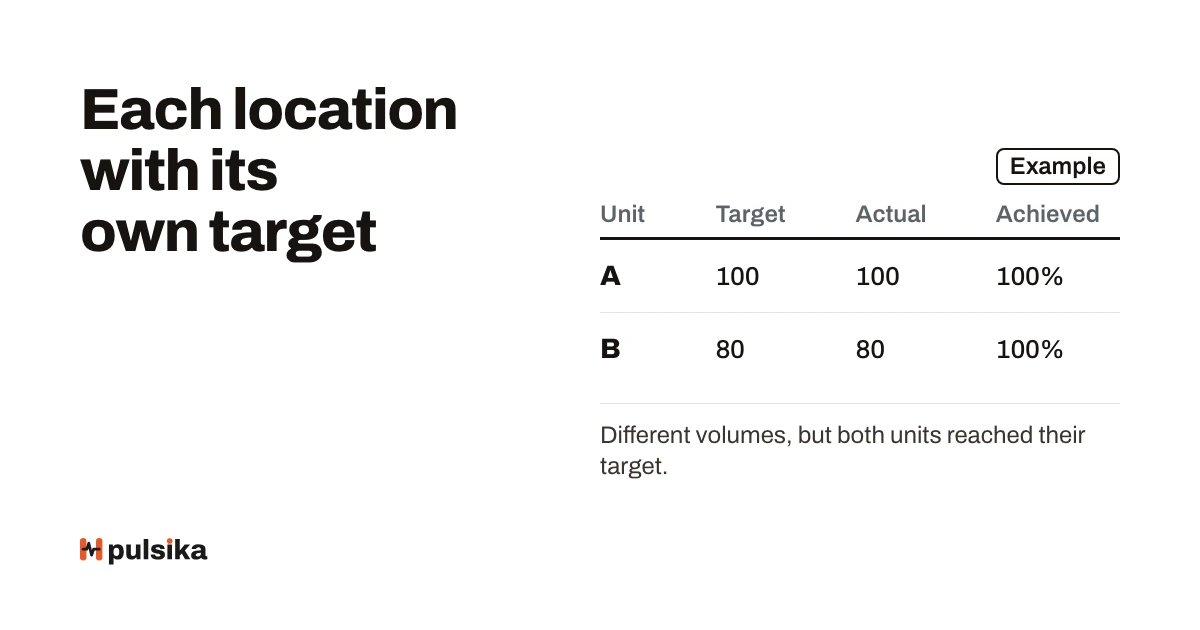
How to set fair targets for different locations: history, potential from footfall or floor space, new locations, relative targets, with an example calculated for four stores.
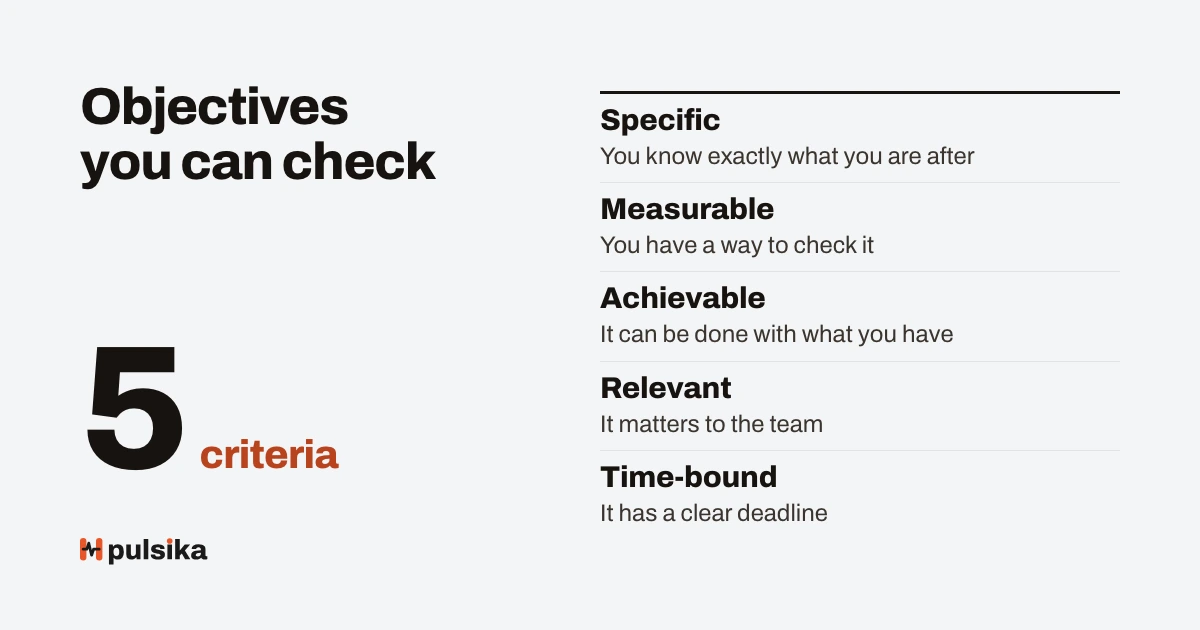
What SMART means, vague objectives rewritten for HR, sales, operations and support, a scored checklist and the situations in which the method does not help.
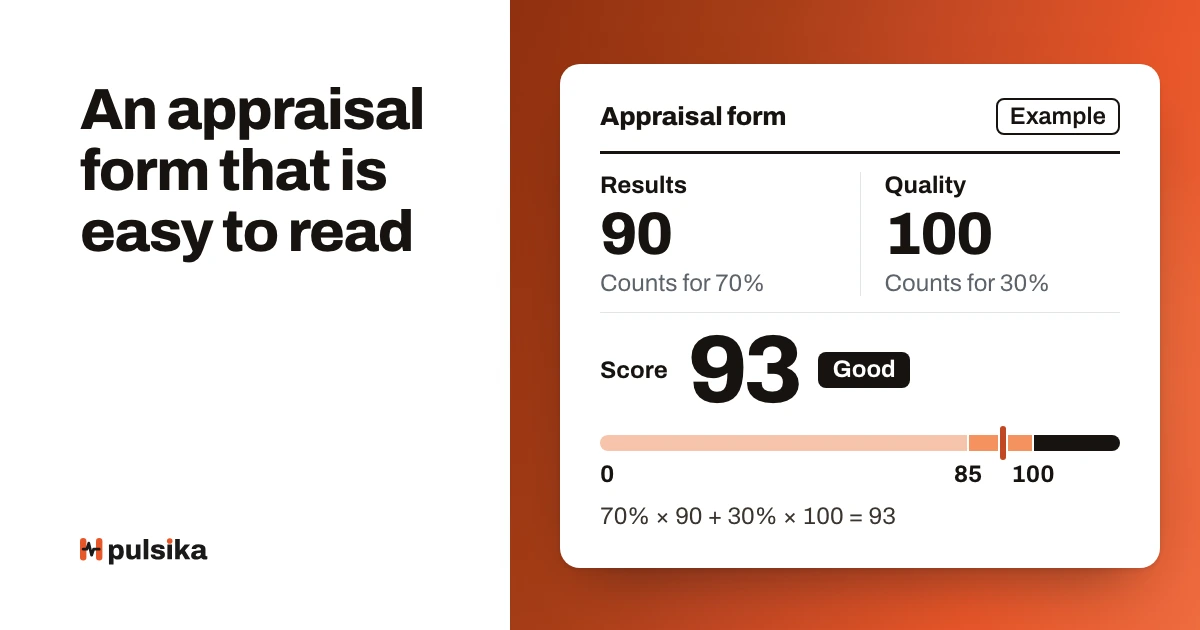
What a complete appraisal form looks like: quantitative and behavioural criteria, weights, a 1–5 scale with thresholds, a worked example and a downloadable Excel template.
What an objective, a KPI, a target and a task are, how they link from the company’s objective to the daily work and how to check the chain, with a worked example.
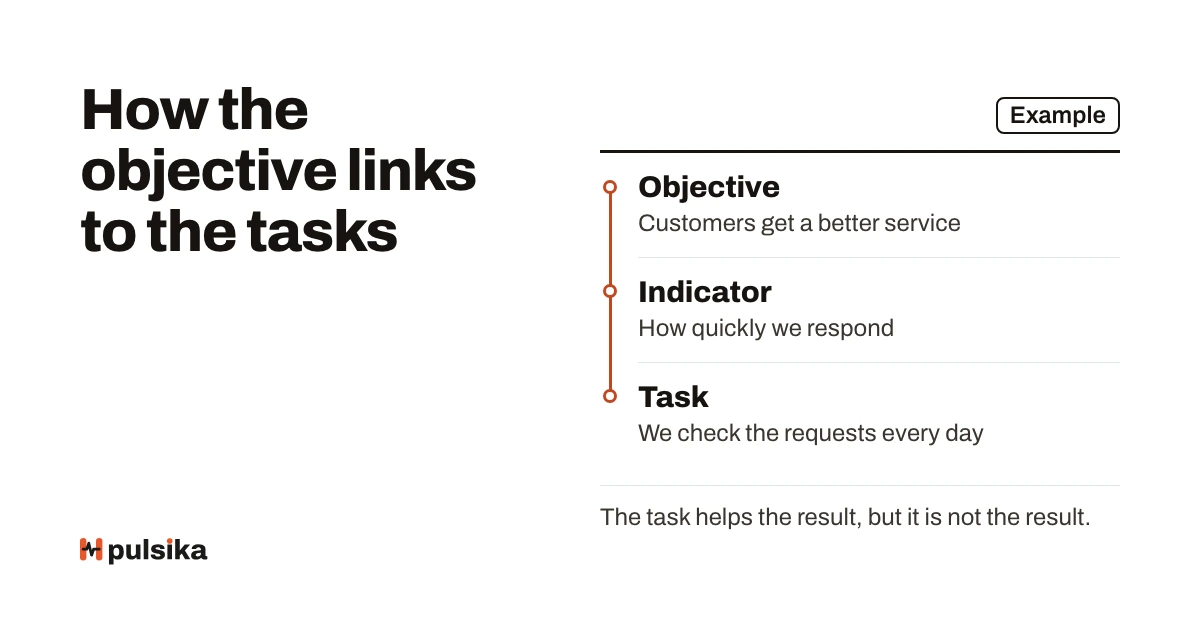
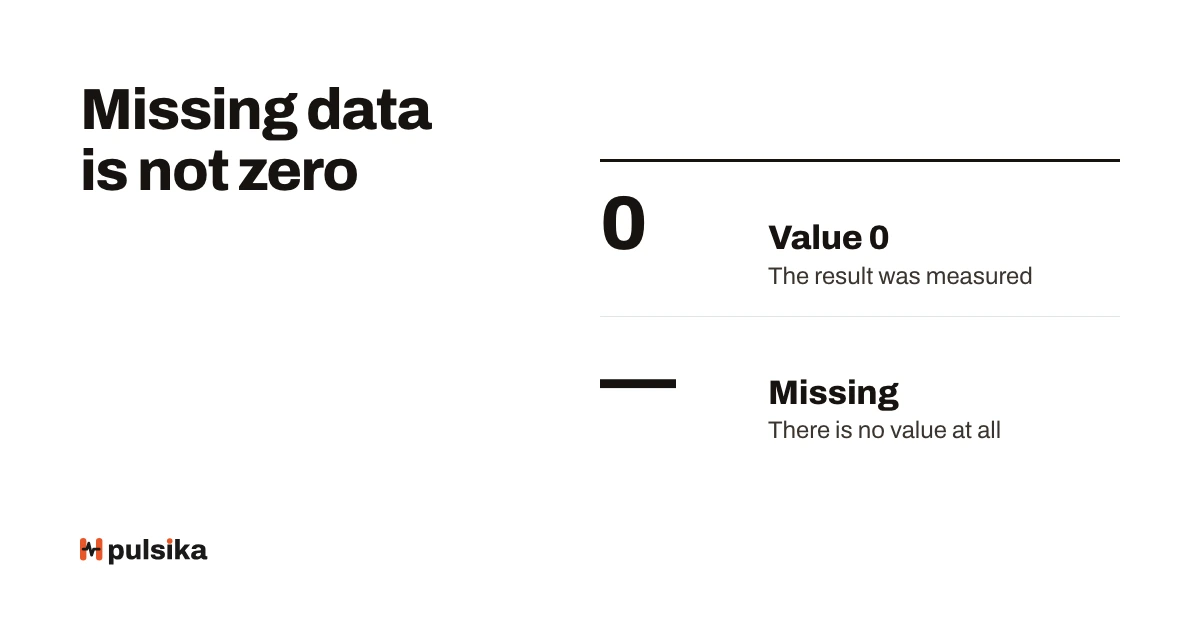
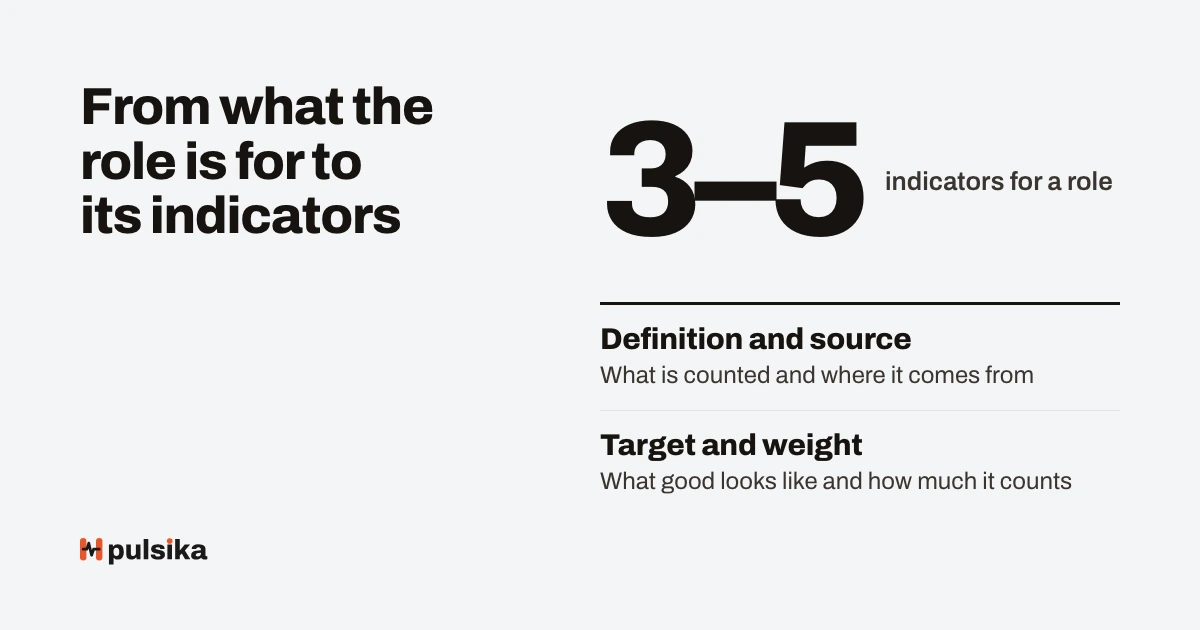
From what a role is for to a scorecard of 3–5 indicators: definition, source, target and weight, a worked calculation, missing data and a trial on past months.
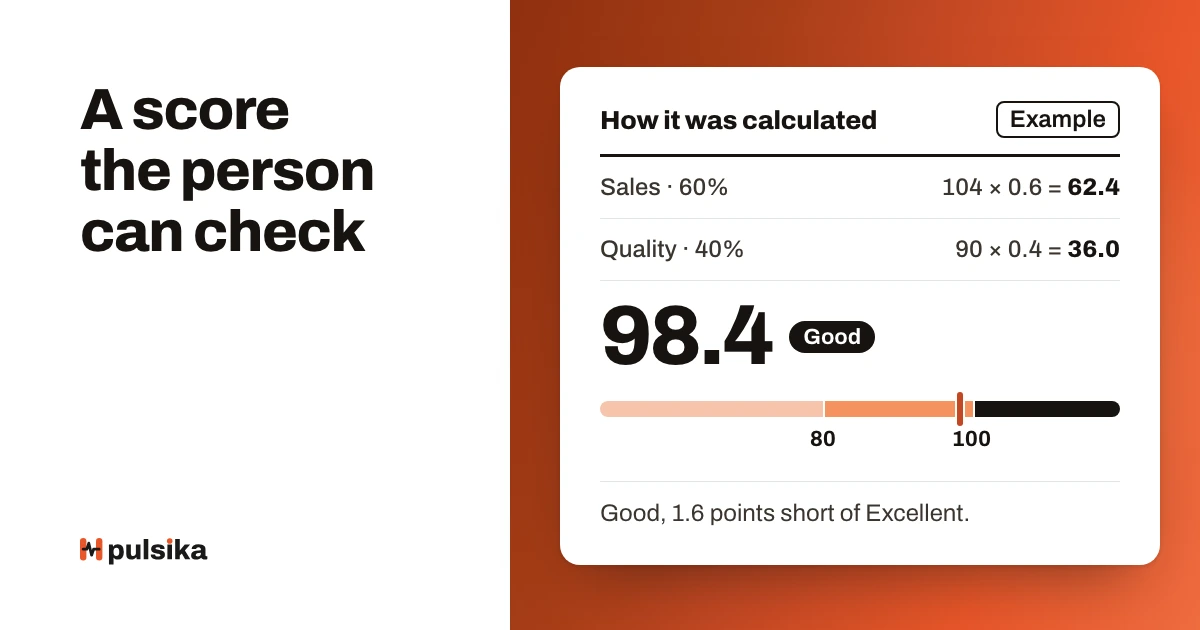
How to explain a score so the person can check it themselves: the calculation step by step, missing data, versions, corrections and the conversation about the result.
Try every module free or book a demo with our team. No card needed.